PostgreSQL advisor · Independent prototype
The calculator assumed I already knew the answer
A pricing calculator could tell me what a PostgreSQL configuration would cost, provided I already knew which configuration I needed. I built a focused AI prototype to explore the missing step.
The prototype is limited to PostgreSQL for now. It is not a production capacity-planning service.
The challenge
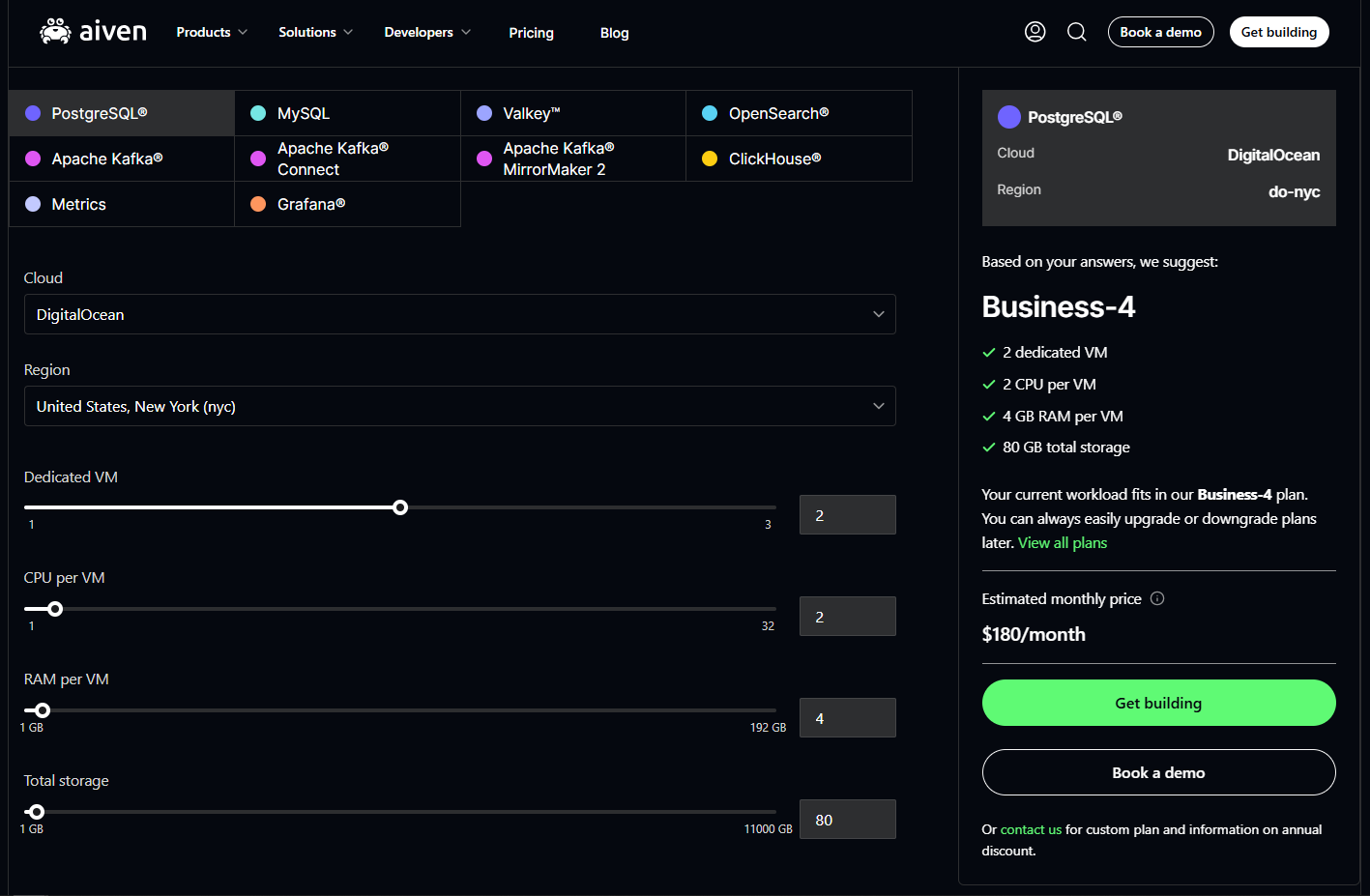
To calculate a price, I first had to choose a cloud, region, number of virtual machines, CPU, RAM and storage. Those were precisely the decisions I needed help making.
My role
I identified the missing decision step, defined the questions and built the AI-assisted PostgreSQL advisor as an independent Lovable prototype.
What changed
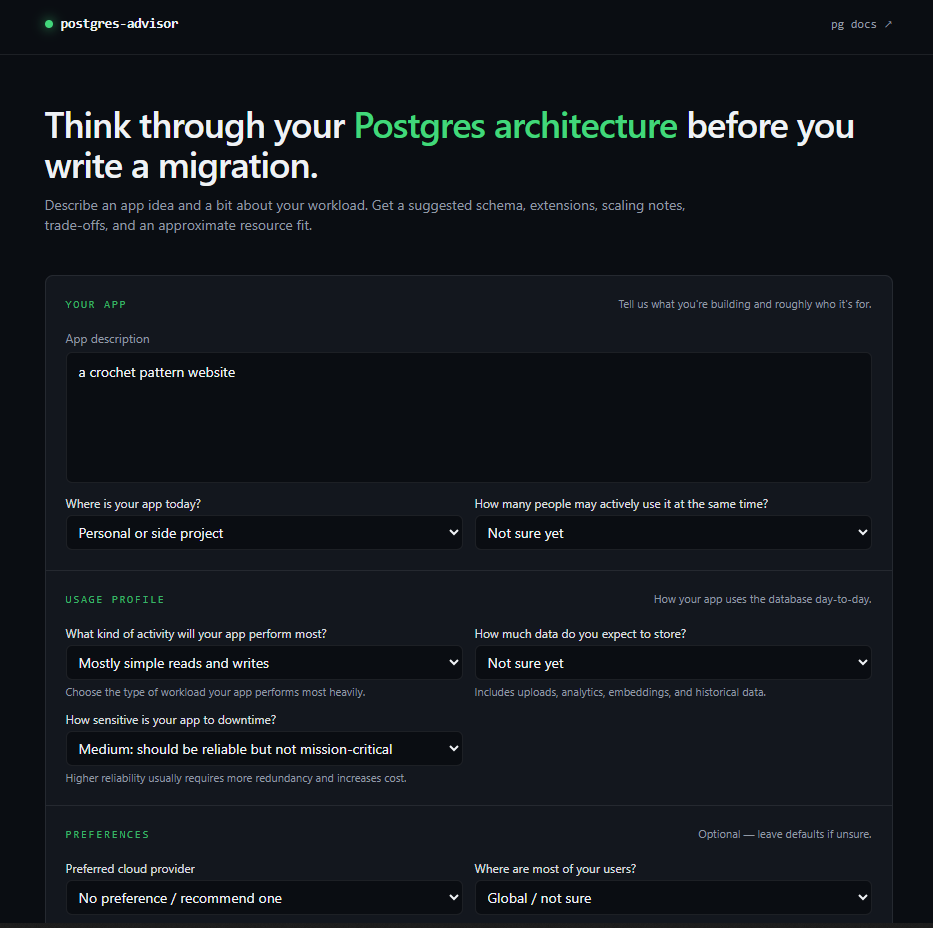
The prototype reverses the sequence. It asks about the product and workload first, then presents a reasoned PostgreSQL starting point with uncertainty, trade-offs and signs that it is time to upgrade.
01The calculator started one step too late
There was nothing wrong with calculating the price of a known configuration. The problem was getting to that configuration in the first place.
The form asked me to choose the cloud, region, virtual machines, CPU, RAM and storage. How was I supposed to know what to fill in? The interface assumed the specialist knowledge I had gone there to get help with.
02Ask questions people can actually answer
I reversed the conversation. Tell me what you are building, how mature it is, roughly how people will use it, what kind of data it handles, how painful downtime would be and how sensitive the budget is.
Not sure yet is a valid answer. Early product decisions are full of uncertainty, so the interface should work with it rather than force people to invent precision.
03Give a starting point, not a magic answer
The result is presented as approximate guidance, not divine truth from the AI machine. It includes a confidence level, a suggested resource fit, reasons, upgrade triggers and risks.
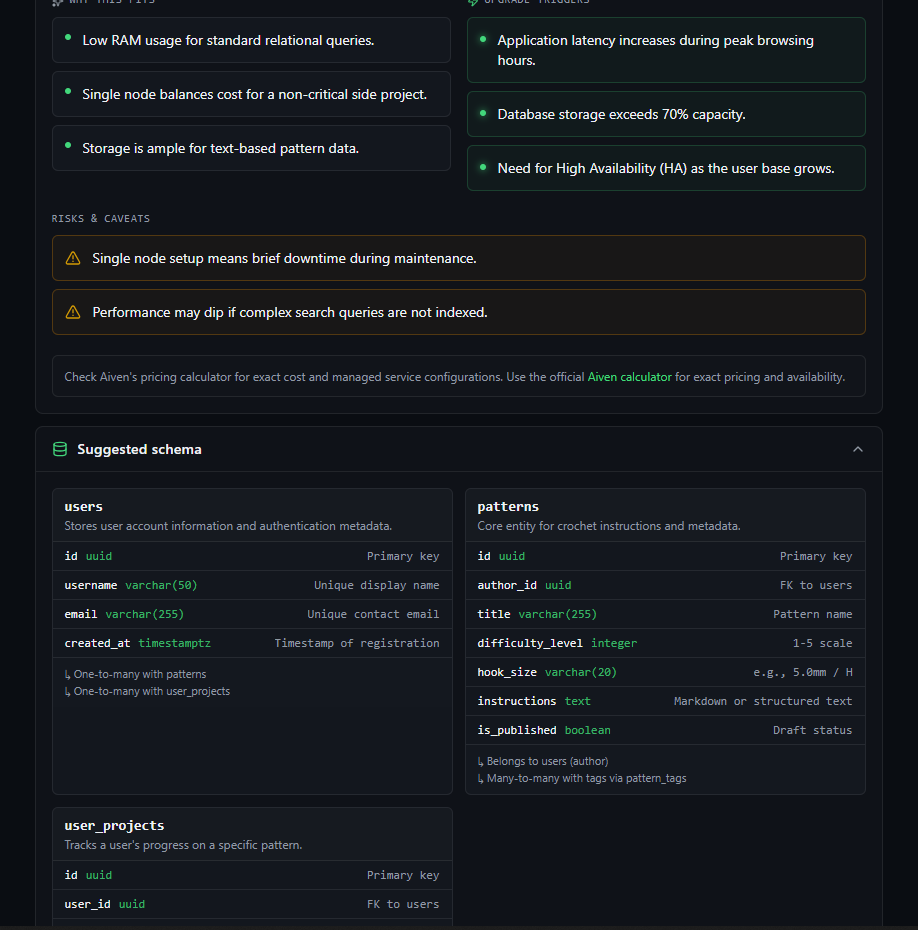
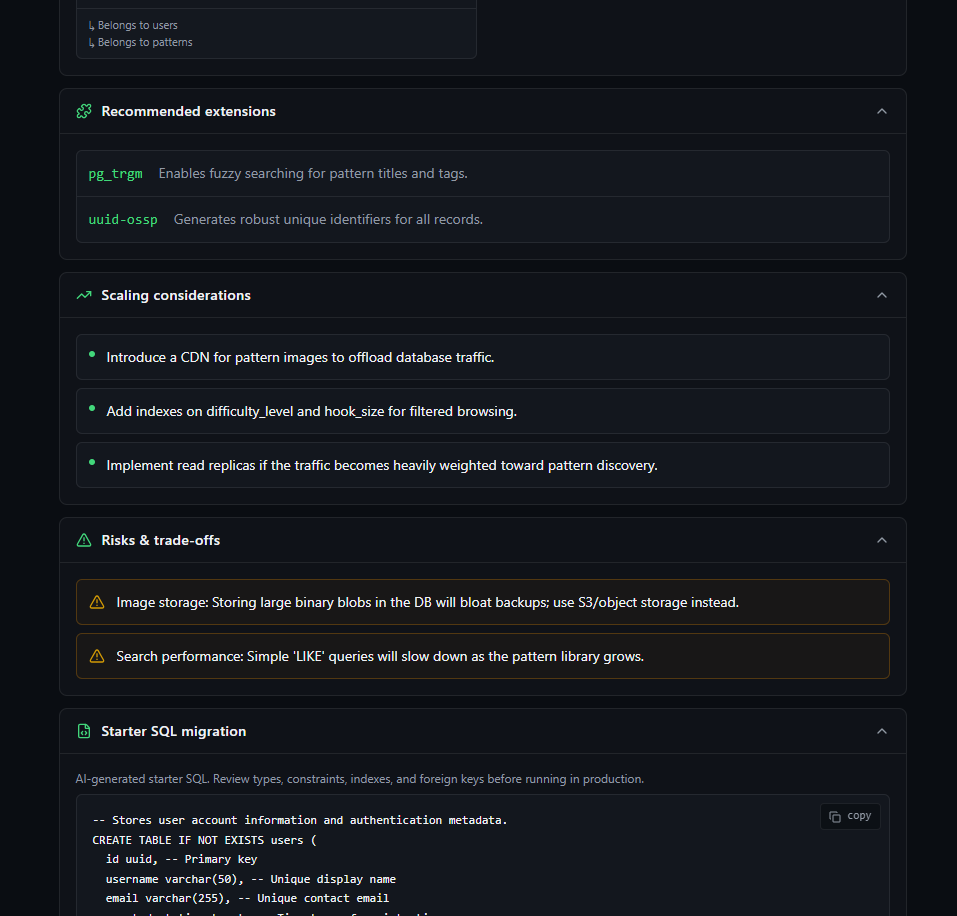
The prototype also explores schema, extensions, scaling considerations, trade-offs and starter SQL. Exact pricing and availability still belong in the provider’s official calculator.
Open the Lovable prototype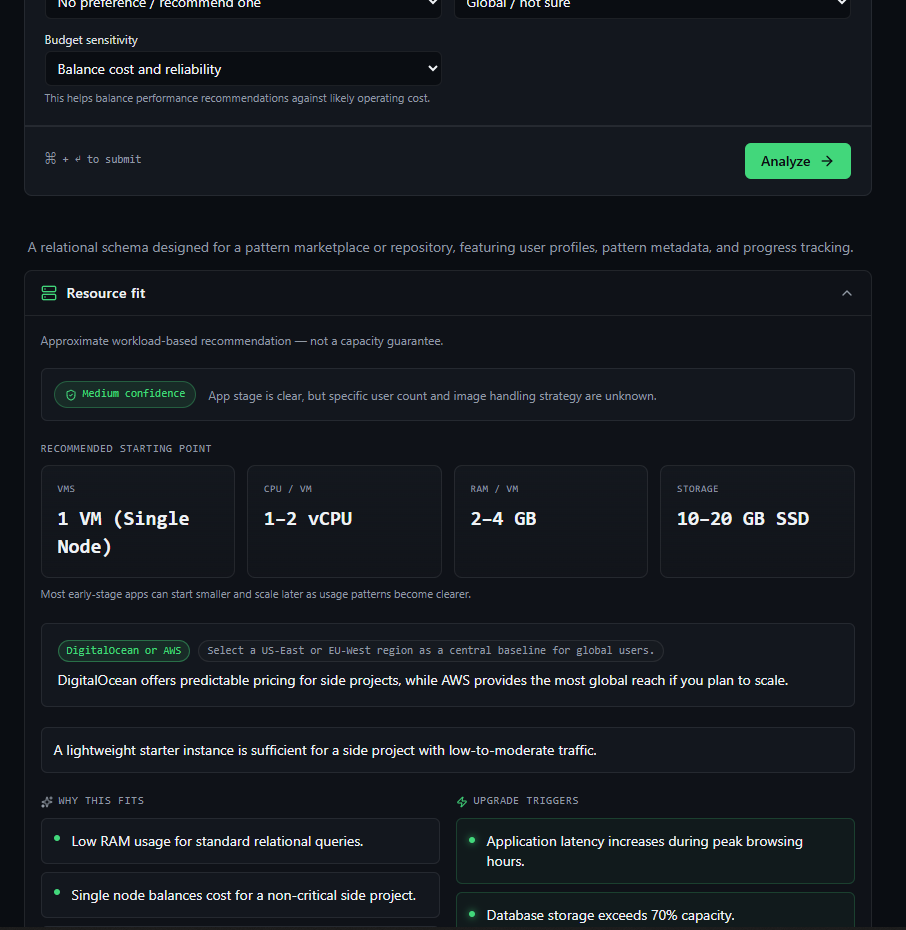
04Small, focused and honest about what it is
This is an independent product experiment inspired by friction I encountered on Aiven’s pricing calculator. It was not commissioned by Aiven and is not affiliated with Aiven.
It covers PostgreSQL only, for now. It is a prototype, not a capacity guarantee or a substitute for reviewing a real production workload with somebody who knows what they are doing.