Independent product · Active development · 2026
WEBZY
I built WEBZY from the foundations up. Then I caught myself making people operate those foundations instead of simply using the product.
The product works. The user experience is now being rebuilt around users’ actual work.
The challenge
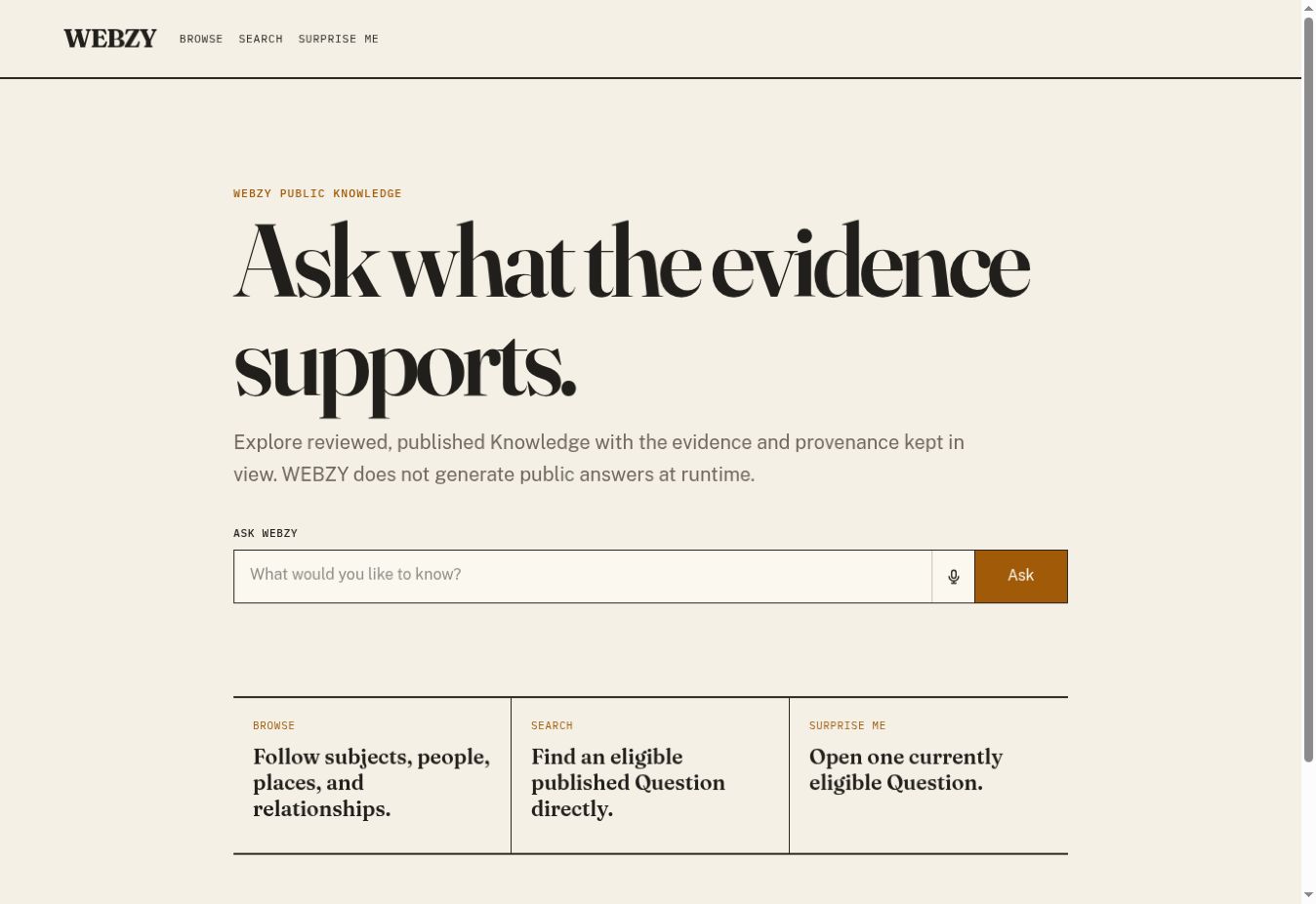
WEBZY had strong machinery for knowledge, evidence, provenance, permissions and publishing. The interface exposed so much of it that users were effectively operating my data model.
My role
I am the founder, product lead and designer. I work directly on the frontend and direct the AI-assisted implementation. The good decisions are mine, and so are the bad ones.
What changed
I stopped expanding the Technical Admin UI and went back to complete end-to-end user journeys across public use, contribution, review, administration and Space ownership.
01What WEBZY is
WEBZY helps people build, govern and use trustworthy knowledge. Underneath, it tracks sources, claims, evidence, provenance, permissions, publication and different versions of an answer.
This case shows the interface work that makes those ideas visible and usable.
Interactive design reference
02I built the visual system as a product
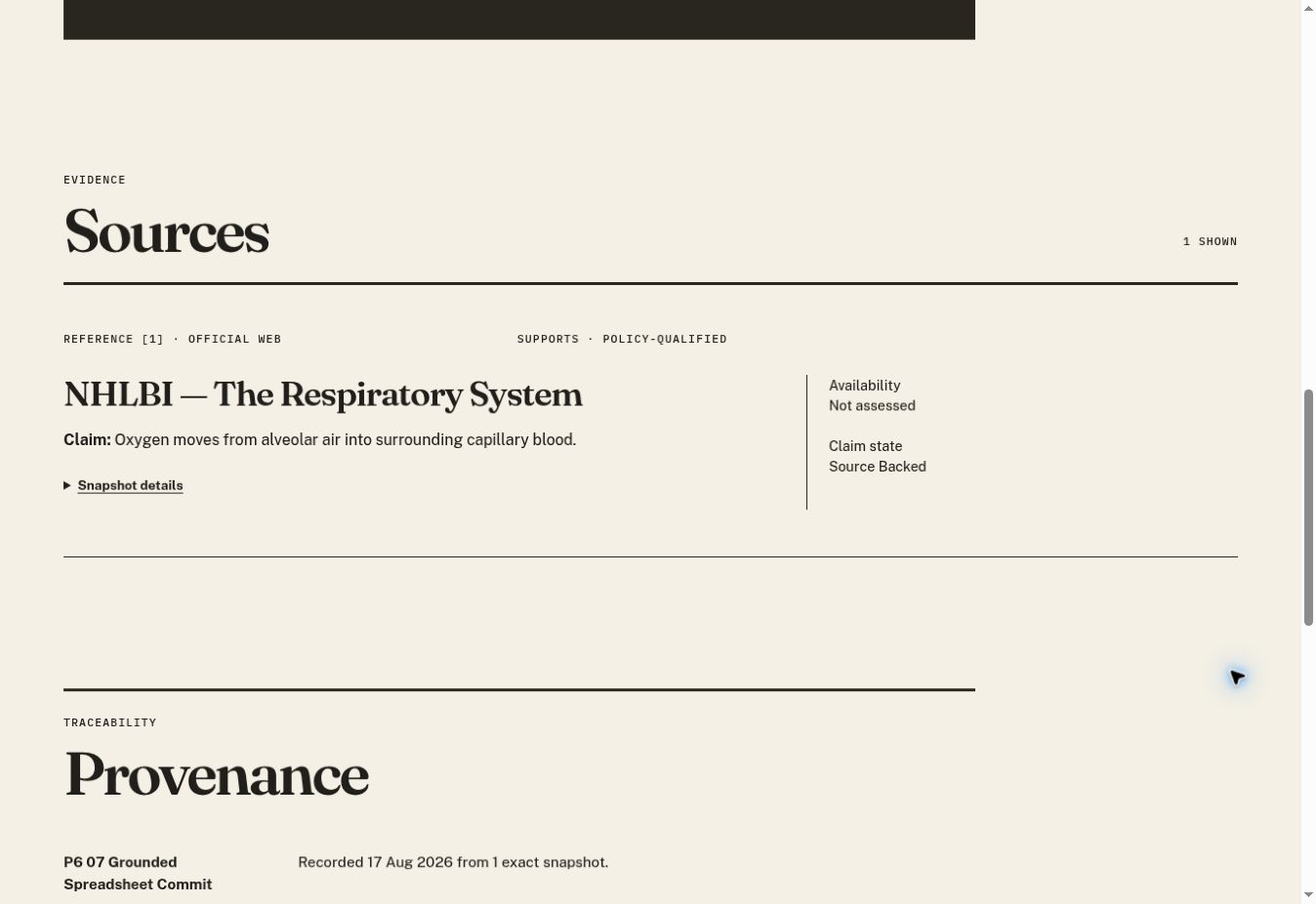
The reference separates foundations, default components, WEBZY-specific knowledge components, complete experiences and non-happy-path states.
Use it below. Change the tabs and the theme. This is the work, not a mood board.
Open the reference full screenMany themes, one product structure
03The product is not the skin
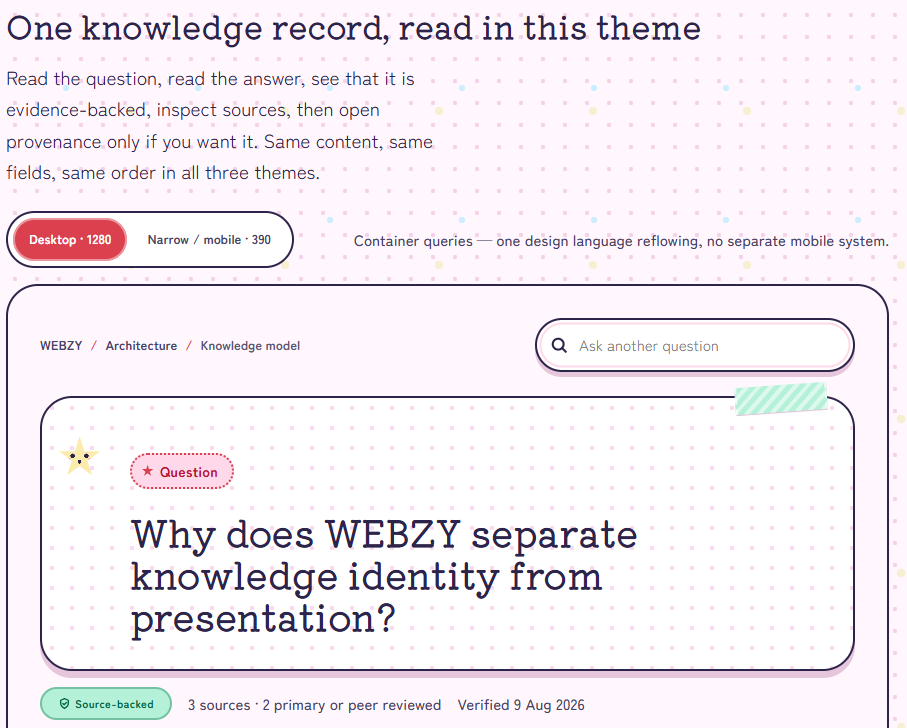
WEBZY Original can become a Kawaii playground in one click. Typography, colour, geometry, decoration and density move. Knowledge identity, evidence, sources, provenance, order and behaviour do not.
That separation is not a CSS party trick. It proves that presentation can change radically without changing what the product means.
04The visual system worked. The journey did not.
The reference proved that I could build a coherent visual and interaction system. Then the actual admin experience exposed a different problem: I was making people operate internal records instead of helping them finish their work.
I stopped expanding the Technical Admin UI and went back to complete end-to-end user journeys across public use, contribution, review, administration and Space ownership.
Keep the visual system
The skin, components and states were not the structural problem.
Redesign whole journeys
A coherent component library cannot rescue the wrong sequence of work.